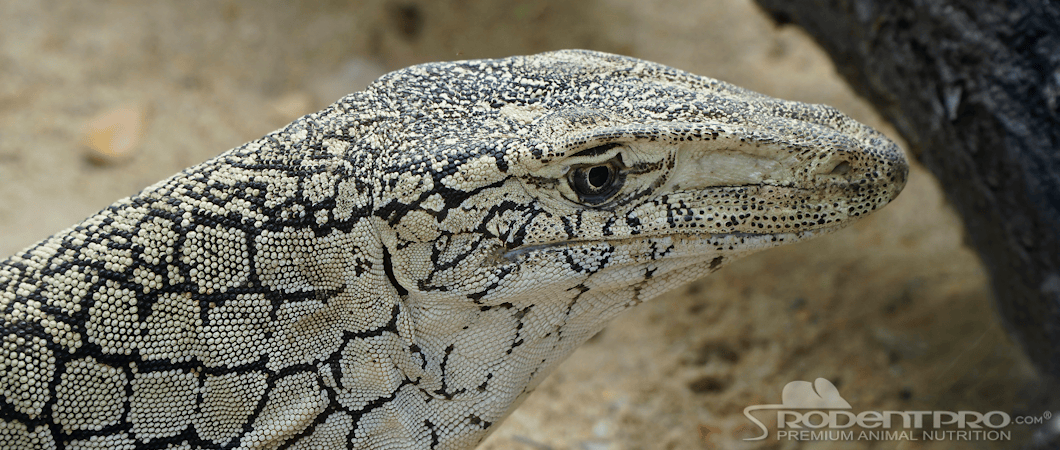
Perentie Monitor (Varanus giganteus)
Found across Africa, Asia, and Australia, monitor lizards include over 80 species ranging from small insect eaters to massive predators like the Komodo dragon. Their adaptability, strength, and unique hunting abilities make them one of the most fascinating reptile families in the world.
The family Varanidae, commonly known as the monitor lizard family, is made up of approximately 80 species, all belonging to a single genus, Varanus. Monitor lizards range across Africa and Asia, throughout Pacific Polynesia, and into Australia. The monitor lizards of Australia are also known as goannas.
Monitor lizards can live in a wide variety of habitats, including rainforests, deserts, and scrubland or savannas. Some species are adept climbers, while others are excellent swimmers.
Monitor Lizards at a Glance
- Family: Varanidae
- Genus: Varanus
- Number of species: Approximately 80
- Size range: About 9 inches to over 10 feet
- Diet: Primarily carnivorous
- Range: Africa, Asia, Australia, Pacific islands
Monitor Lizard Habitat and Distribution
Monitor lizards are highly adaptable reptiles that occupy many different environments. Their ability to thrive in rainforests, deserts, savannas, and coastal regions has contributed to their wide geographic range.
Some monitor species live primarily in trees, others are ground dwelling, and several are semi aquatic, spending much of their time in and around water.
Physical Characteristics of Monitor Lizards
Monitors have long, slender bodies, four strong legs, and a powerful tail. They are also characterized by a long neck, and most species have a tapered snout.
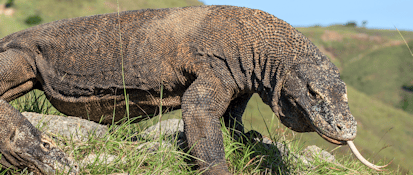
Monitor lizards use their long, forked tongues to smell their environment and hunt for prey. Similar to snakes, each flick of the tongue collects scent particles. When the tongue is pulled back into the mouth, it places scent molecules into the Jacobson’s organ, which is located on the roof of the mouth just behind the internal openings of the nose. This is where scent particles are interpreted as smells.
Monitor Lizard Defense Behavior
When cornered or threatened, monitor lizards will often turn sideways to present a larger profile. They may puff out their necks and hiss to warn potential threats.
If an intruder gets too close, a monitor lizard can use its tail as a whip. With a single, well-aimed swing, the tail can deliver a painful strike.
Monitor Lizard Tails and Mobility
Monitor lizard tails are extremely strong and do not exhibit caudal autonomy, which is the ability to drop the tail when grabbed, as seen in tegus and iguanas.
In fact, some tree dwelling monitors, such as the brightly colored green tree monitor, have prehensile tails that allow them to grip branches for added support and balance.
Monitor Lizard Diet and Feeding Habits
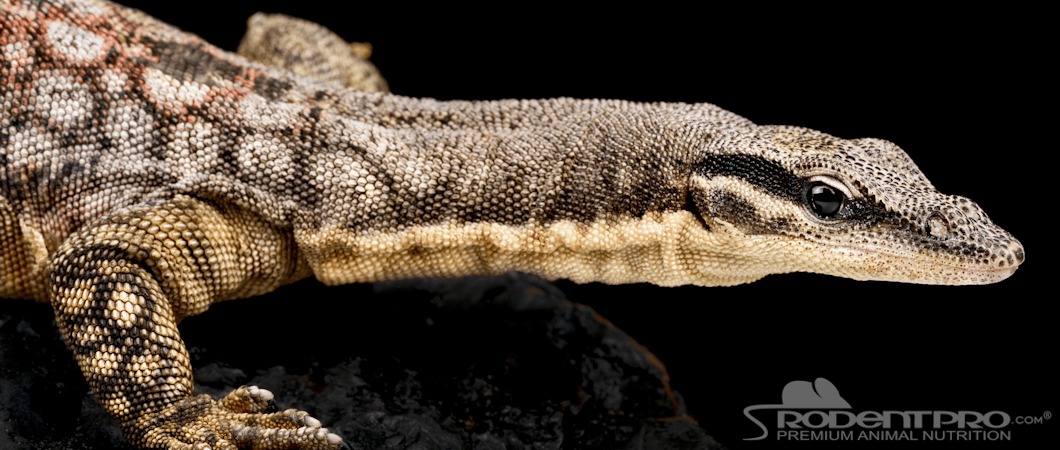
Kimberley rock monitor (Varanus glauerti)
A few monitor species are omnivores or even largely frugivorous, feeding on fruit, but most monitor lizards are carnivores.
Their diet varies based on size and habitat. Smaller species, such as the Kimberley rock monitor (Varanus glauerti), primarily feed on insects. Semi aquatic species feed on fish and crustaceans. Larger land dwelling and arboreal species feed on reptiles, birds, and mammals.
Eggs are considered a delicacy by many monitor species. Smaller eggs are often swallowed whole, while larger eggs may be crushed in the jaws so the contents can be consumed.
Why Are They Called Monitor Lizards?
There is a long-standing story that explains how monitor lizards received their name. Several species, such as Nile monitors in Africa and water monitors in Asia, patrol riverbanks searching for crocodile nests to raid for eggs.
Early civilizations relied heavily on river water for daily life. People observed that when these lizards suddenly fled the shoreline, it often signaled the return of crocodiles to their nests. In this way, the lizards acted as “monitors” of danger.
How Monitor Lizards Eat Large Prey
When it comes to feeding, monitor lizards are capable of swallowing large prey whole. Even animals slightly larger than their head can often be consumed due to flexible jaws and strong throat muscles.
Monitor Lizard Size and Species Examples
Monitor lizards range dramatically in size, from very small insect eating species to massive apex predators.
Dampier Peninsula Monitor
The smallest of all monitor species is the Dampier Peninsula monitor (Varanus sparnus). This species is found only in the Dampier Peninsula of Western Australia.
These active lizards inhabit semi-arid rocky areas and grow to only about 9 inches in length. Due to their small size, they feed primarily on insects.
Savannah Monitor
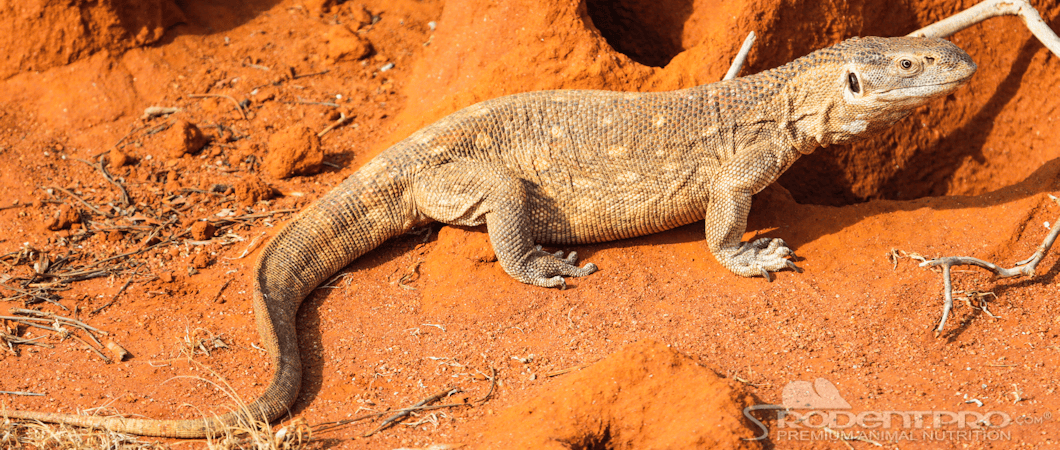
Savannah Monitor (Varanus exanthematicus)
One of the most commonly kept monitor species is the African savannah monitor (Varanus exanthematicus). These lizards are often imported at low prices, which unfortunately leads to many being kept without proper care.
Savannah monitors require large enclosures and high temperatures. They are native to the dry savannahs of Africa, where temperatures can reach 100 degrees Fahrenheit. Although they grow over 3 feet in length, their natural diet consists mainly of invertebrates. Feeding captive savannah monitors mice and rats for enrichment can be beneficial. However, caution should be exercised to avoid overfeeding, as large quantities of rodents can lead to obesity and poor health.
Nile Monitor
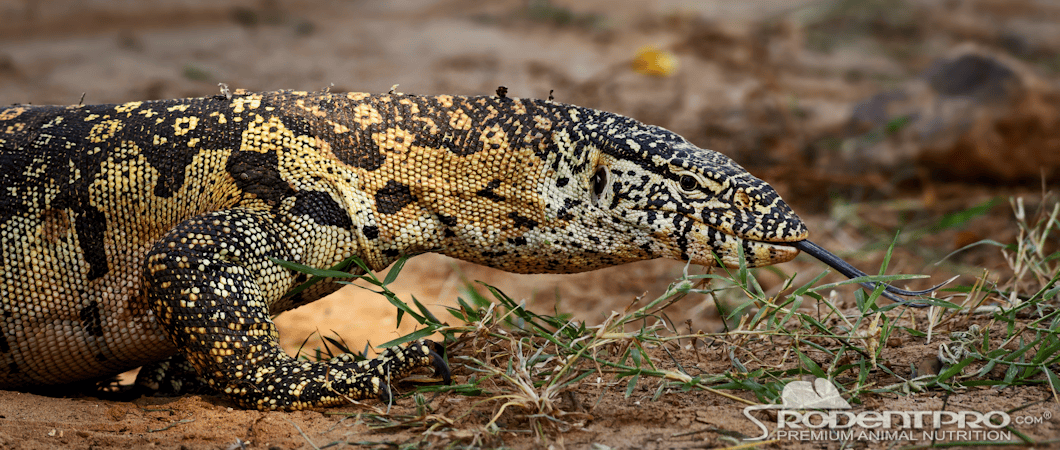
Nile Monitor (Varanus niloticus)
Another African monitor once commonly imported as a pet is the Nile monitor (Varanus niloticus). Nile monitors are large, powerful, semi aquatic lizards that can reach 6 feet in length.
Wild caught individuals were typically nervous and defensive. As they grew larger, they were capable of inflicting serious injuries.
Asian Water Monitor
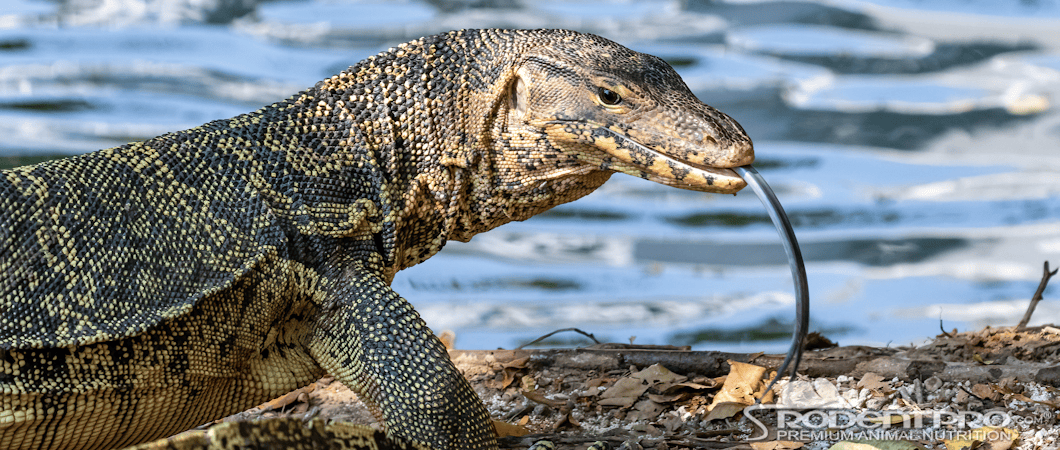
Asian Water Monitor (Varanus salvator)
The Asian water monitor is the second largest lizard species by mass. These monitors can reach lengths of up to 8 feet and weigh nearly 100 pounds.
They are semi aquatic and require large areas of both land and water. Their diet includes fish, crustaceans, rats, and other prey. Native to Southeast Asia, Asian water monitors have even been observed swimming in the ocean.
Komodo Dragon
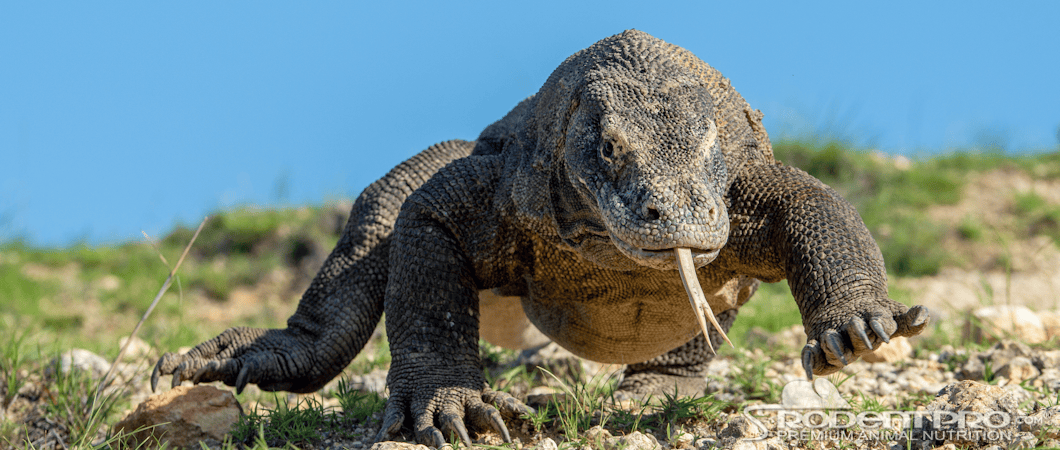
Komodo Dragon (Varanus komodoensis)
The largest living lizard is the Komodo dragon (Varanus komodoensis). These massive reptiles can grow over 10 feet in length and weigh more than 300 pounds.
Komodo dragons are found only on the island of Komodo and a few nearby islands in Indonesia. For many years, their bite was believed to be deadly due to harmful bacteria. Research completed in 2013 confirmed that Komodo dragons are venomous, and that venom plays the primary role in incapacitating prey.
Conservation
Many monitor lizard species are impacted by habitat loss and wildlife trade. Responsible education, conservation efforts, and habitat protection are important to ensure these reptiles continue to thrive in the wild.
Get Premium Quality Food For Your Monitor Lizard
When it comes to feeding monitor lizards, you can count on RodenPro.com to provide you with only the finest premium quality animal food. We carry a large supply of the crickets, roaches, mealworms, superworms, waxworms and frozen rodents required to provide your monitor lizard with optimal nutrition.
We look forward to assisting you with premium products and unparalleled service!