The alligator family (Alligatoridae) is one of three families within the order Crocodylia, a group that includes all living crocodilians. There are currently 27 recognized species of crocodilians worldwide. The largest family is Crocodilidae, which contains 17 species of crocodiles, while the unique Gavialidae family includes just 2 species of gharials. The remaining 8 species belong to the alligator family, Alligatoridae.
Although the family is named after the alligator, most members of Alligatoridae are actually caimans. Six species of caiman live throughout North, Central, and South America. Only two true alligator species remain today: the American alligator and the Chinese alligator. While the American alligator is native to the Western Hemisphere, the Chinese alligator is the only member of the alligator family found in the Eastern Hemisphere.
Black Caiman: The Largest Member of the Alligator Family
Despite the family name, the largest member of Alligatoridae is not an alligator but the black caiman (Melanosuchus niger). Native to the Amazon River Basin of South America, black caimans can grow up to 15 feet in length and occasionally exceed that size.
Black caimans are named for their dark coloration. Adults are primarily black with small white markings, while juveniles often display golden-colored heads with large black blotches along the lower jaw. As they mature, these colors gradually fade.
Their thick, powerful skulls allow them to prey on a wide variety of animals, including fish, reptiles, birds, and mammals. Like many caiman species, black caimans possess a distinctive bony ridge between their eyes.
Spectacled Caiman
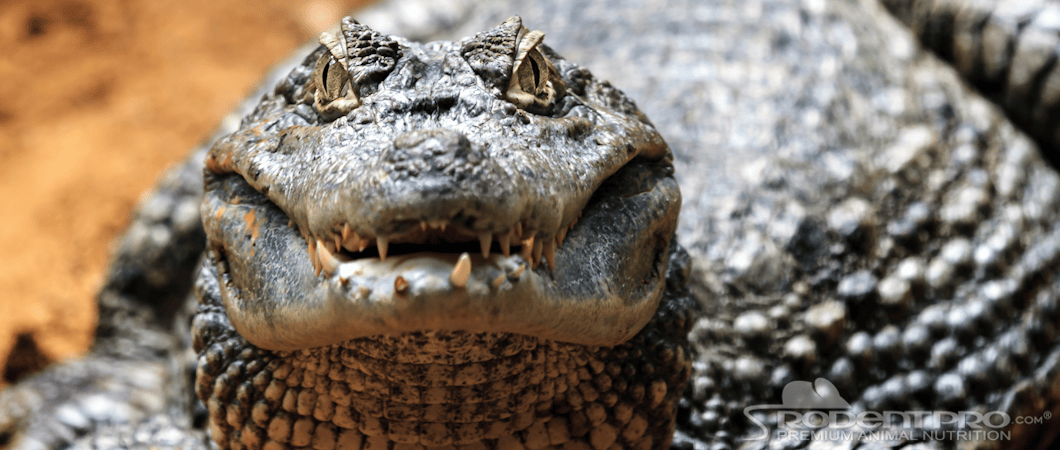
Spectacled Caiman (Caiman crocodilus)
The spectacled caiman (Caiman crocodilus) is a medium-sized crocodilian found throughout Mexico, Central America, and much of South America. Adults typically reach lengths of up to 8 feet. These caimans are usually tan, olive, or greenish in color with darker markings. Their name comes from the bony ridge between their eyes that resembles the bridge of a pair of eyeglasses. The spectacled caiman is highly adaptable and is divided into four recognized subspecies. One of the most fascinating is the Rio Apaporis caiman, which was once believed to be extinct before being rediscovered in the wild.
Yacare Caiman
The Yacare caiman (Caiman yacare) was once classified as a subspecies of the spectacled caiman but is now recognized as a distinct species. Found throughout portions of central South America, Yacare caimans are darker in coloration and can be identified by the distinctive banding patterns on their lower jaws. They inhabit rivers, marshes, and floodplain habitats throughout their range.
Broad-Snouted Caiman
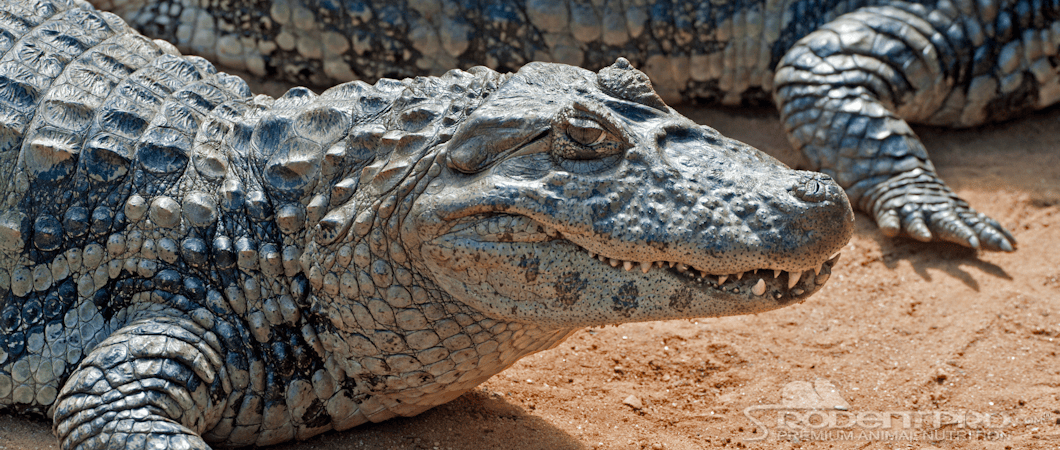
Broad-snouted Caiman (Caiman latirostris)
The broad-snouted caiman (Caiman latirostris) is one of the most recognizable members of the alligator family due to its unusually wide snout.
Native to eastern South America, this species reaches lengths of approximately 8 feet. Its broad, powerful jaws allow it to feed on a variety of prey, including fish, amphibians, crustaceans, and hard-shelled animals such as snails. Like other members of the genus Caiman, it possesses the characteristic bony ridge between its eyes.
Dwarf Caiman
The dwarf caiman (Paleosuchus palpebrosus), also known as Cuvier's dwarf caiman, is the smallest crocodilian species in the world.
Native to the forested regions of northern South America, dwarf caimans prefer fast-flowing streams and small rivers. Unlike many crocodilians, they can tolerate cooler water temperatures.
Adults typically grow slightly longer than 4.5 feet. These highly nocturnal reptiles often leave the water at night to hunt. Their diet consists primarily of fish, amphibians, crustaceans, birds, and small mammals.
Unlike many other caimans, the dwarf caiman lacks the prominent bony ridge between its eyes, giving the top of its snout a smooth appearance.
Smooth-Fronted Caiman
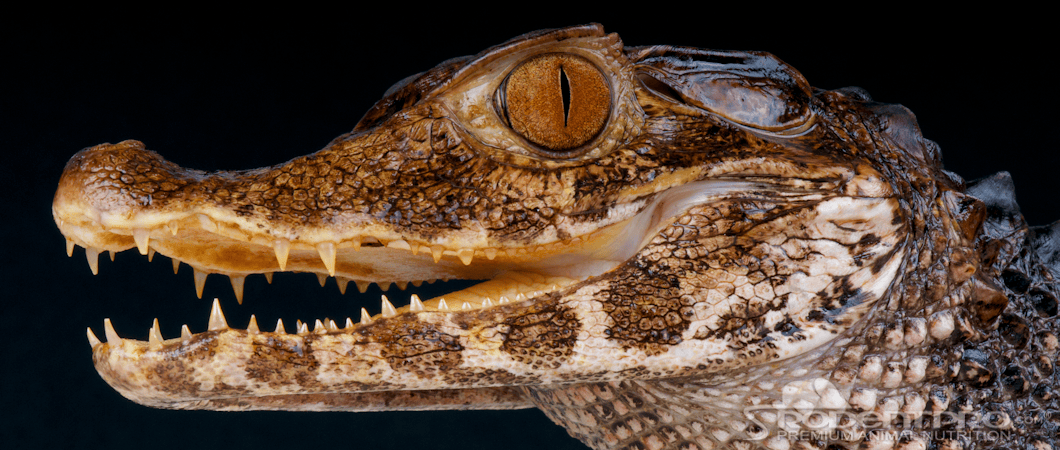
Smooth-fronted Caiman (Paleosuchus trigonatus)
The smooth-fronted caiman (Paleosuchus trigonatus), also known as Schneider's dwarf caiman, closely resembles the dwarf caiman but grows larger, reaching lengths of up to 6 feet.
This species shares similar habitats and behaviors with Cuvier's dwarf caiman and is often found in forested river systems throughout northern South America. It can be distinguished by its larger size and differences in the arrangement of the armored scutes along its back.
The Two Living Alligator Species
While caimans make up most of the Alligatoridae family, only two species of true alligators remain today. Both belong to the genus Alligator:
- American alligator (Alligator mississippiensis)
- Chinese alligator (Alligator sinensis)
These species represent the last surviving members of an ancient lineage that once included many more relatives.
Chinese Alligator

Chinese Alligator (Alligator sinensis)
The Chinese alligator is one of the world's most endangered crocodilians. Adults typically reach lengths of around 6 feet, making them significantly smaller than American alligators. Today, Chinese alligators survive in a highly restricted range within the Yangtze River Basin of eastern China. Fewer than 150 adults are believed to remain in the wild. Like American alligators, Chinese alligators inhabit temperate climates and undergo brumation, a reptilian form of hibernation, during the winter months. They construct complex burrow systems with multiple chambers where they remain protected from freezing temperatures.
Chinese Alligator Diet
Chinese alligators primarily feed on fish, snails, crustaceans, frogs, and other small aquatic animals found in wetlands and waterways throughout their habitat. Their broad jaws are particularly well suited for crushing the shells of snails and mollusks, which make up an important portion of their diet. In zoological facilities and other managed care settings, Chinese alligators may also be fed appropriately sized whole prey items, including fish, rodents, chickens, or quail, to provide balanced nutrition and encourage natural feeding behaviors.
American Alligator

American Alligator (Alligator mississippiensis)
The American alligator is the larger of the two alligator species and one of the most recognizable reptiles in North America. Large males commonly reach lengths of 12 to 14 feet and can weigh between 500 and 1,000 pounds. American alligators are found throughout the southeastern United States and inhabit a variety of freshwater environments, including rivers, lakes, marshes, swamps, and wetlands.
American Alligator Diet
American alligators are opportunistic carnivores that consume a wide variety of prey. Young alligators feed primarily on insects, small fish, frogs, and other small animals. As they grow larger, their diet expands to include fish, turtles, snakes, birds, crustaceans, and mammals such as muskrats, raccoons, and nutria. In managed care, appropriately sized feeder animals such as mice, rats, chickens, quail, rabbits, and other whole prey items may be used as part of a carefully planned diet under proper professional guidance.
As apex predators, American alligators play a critical role in maintaining healthy wetland ecosystems by helping regulate prey populations and creating habitat features that benefit many other species.
Conservation and the Future of the Alligator Family
The members of the alligator family face very different futures. While some species remain common throughout their native habitats, others face significant threats from habitat loss, pollution, hunting, and human development.
Perhaps the greatest conservation success story within Alligatoridae is the American alligator. Once driven to the brink of extinction by unregulated hunting and habitat destruction, strict legal protections and wildlife management efforts helped the species recover dramatically. Today, an estimated 5 million American alligators inhabit wetlands across the southeastern United States.
The recovery of the American alligator demonstrates what can be achieved through effective conservation programs and habitat protection. It also provides hope for endangered species such as the Chinese alligator, which remains critically endangered with fewer than 150 adults believed to survive in the wild. Continued conservation efforts will be essential to ensure that future generations can appreciate the remarkable diversity of the alligator family and the important ecological role these ancient reptiles play in ecosystems around the world.
Get Premium Quality Food For Reptiles
Whether you keep crocodilians in professional care or simply enjoy learning about these remarkable reptiles, understanding the alligator family's natural diets and feeding behaviors provides valuable insight into their role as apex predators. If you're looking for high-quality feeder animals for reptiles and other carnivores, be sure to explore our selection of premium frozen feeders, including mice, rats, chicks, quail, rabbits, and more..