Reticulated Python (Malayopython reticulatus)
Stories of giant snakes have existed throughout history, from the jungles of the Amazon rainforest to the tropical islands of Southeast Asia and Indonesia. Tales of enormous serpents have fascinated people for generations, but how much truth is behind these stories? Just how large can snakes really grow in the wild?
There are two primary ways to measure the size of a giant snake. One is overall mass or weight, while the other is total length.
The Heaviest Snake in the World
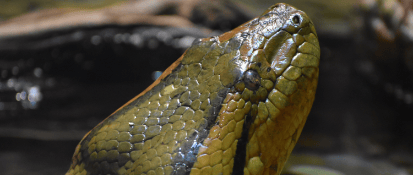
When it comes to weight, the undisputed heavyweight champion is the green anaconda of South America. Green anacondas commonly reach weights between 250 and 300 pounds. In 2024, an exceptionally large anaconda discovered in the northern Amazon region of Ecuador was measured at 20.7 feet long and weighed approximately 440 pounds. It is safe to say that the green anaconda is, on average, the heaviest snake species in the world.
At present, there are two recognized species of green anaconda: the Southern Green Anaconda and the newly identified Northern Green Anaconda. The northern species is believed to grow larger than its southern counterpart.
The Search for the Longest Snake

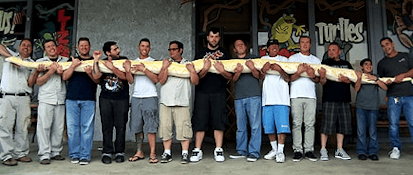
Length, however, is a completely different category. For decades, the reticulated python has been considered the longest snake species on Earth. One famous account dates back to 1912, when a reticulated python reportedly killed in Sulawesi, Indonesia, was measured at an incredible 32 feet 10 inches long. This measurement remains listed in the Guinness Book of World Records as the longest snake ever recorded.
But just how many snakes longer than 30 feet actually exist?
That question inspired an unusual challenge in 1910 when Theodore Roosevelt, working alongside the Bronx Zoo, offered a reward of $1,000 to anyone who could produce a live snake measuring 30 feet or longer. The reward remained unclaimed for decades and eventually increased to $50,000.
One possible contender appeared in 1993 when a massive, reticulated python captured in Borneo arrived at the Bronx Zoo. The snake, later named Samantha, was rumored to exceed 30 feet in length. However, when zoo staff accurately measured her, Samantha fell short at 26 feet long and approximately 275 pounds. Even so, she became famous as one of the largest snakes ever kept in captivity. Samantha died in 2002, and the long-standing reward for a 30-foot snake was eventually discontinued.
After Samantha’s death, another snake would take the spotlight. In 2011, a reticulated python named Medusa was officially recognized as the longest snake in captivity, measuring 25 feet 2 inches long and weighing approximately 350 pounds. Medusa currently lives at the Edge of Hell Haunted House in Kansas City, Missouri.
Measuring Giant Snakes
Today, more than 100 years after the original 32-foot claim from Indonesia, many experts question the accuracy of that historic measurement. The methods and tools used at the time are unknown, and hunters have often been known to exaggerate their stories. There is also another complication. Once a snake dies and its muscles relax, the body can stretch beyond its natural living length. This raises an interesting question: should the world’s longest snake be measured alive or dead?
Determining the true maximum size of wild reticulated pythons is difficult for another reason. These snakes inhabit dense tropical rainforests where thick vegetation provides incredible camouflage. Even enormous snakes can remain nearly invisible against the dark forest floor.
Masters of Camouflage and Ambush
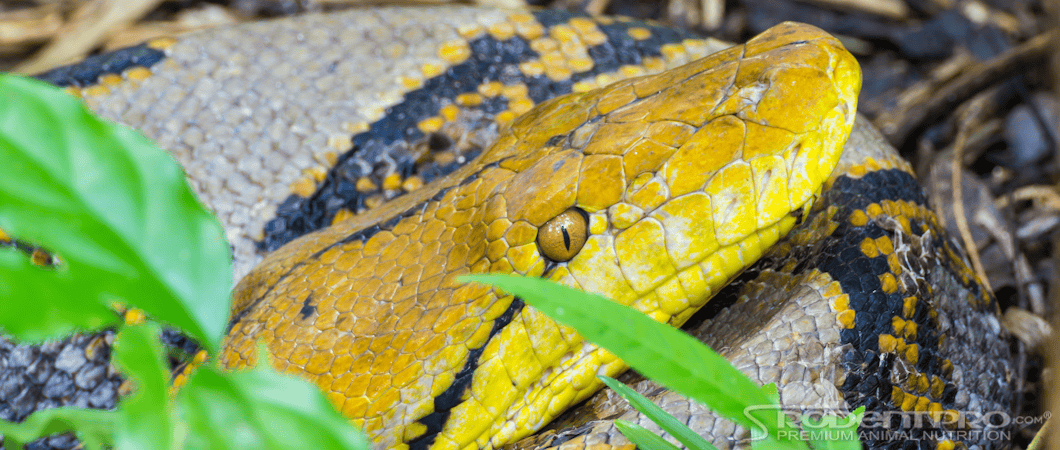
Reticulated Python (Malayopython reticulatus)
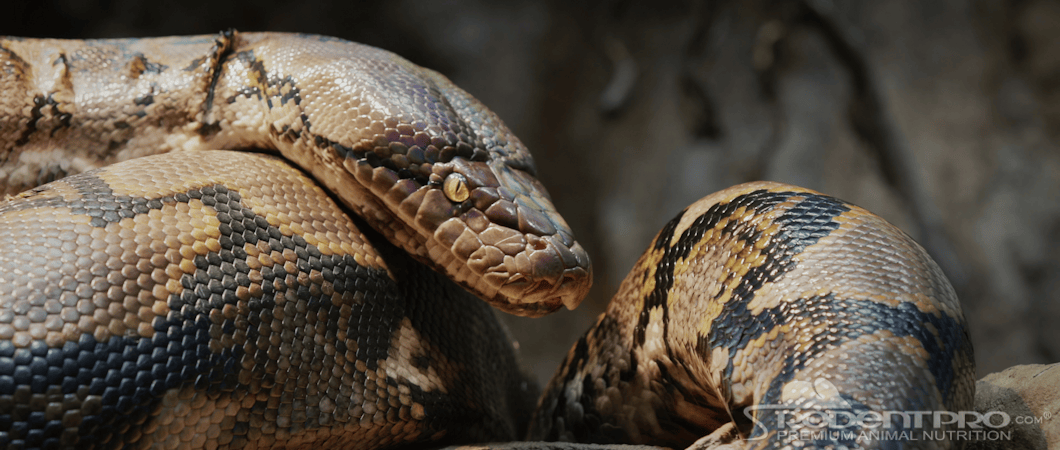
The name “reticulated” refers to the snake’s intricate pattern of intersecting lines and shapes. Dark markings crisscross across the body, creating the appearance of a net draped over the snake. Combined with shades of gray, yellow, orange, and white, this pattern allows the python to blend perfectly among vines, roots, and fallen leaves.
Even the largest individuals can go unnoticed for years.
Reticulated pythons are also ambush predators that spend long periods remaining motionless. Rather than actively hunting, they often wait in areas where prey animals regularly travel. Using thermal sensing pits located along the scales near their mouths, the snakes can detect body heat while also using their sense of smell to locate nearby prey.
When the right opportunity presents itself, the python strikes with incredible speed. A reticulated python’s mouth contains roughly 100 curved teeth that point backward, helping secure struggling prey while the snake gradually works the animal deeper into its jaws using a ratchet like motion.
Almost immediately after striking, the python wraps several powerful coils around the prey animal and begins constriction. For many years, scientists believed constriction worked primarily by suffocation. Modern research, however, shows that large constrictors apply enough pressure to restrict blood flow and even stop the heart, leading to a rapid and efficient death.
The Discovery of Ibu Baron
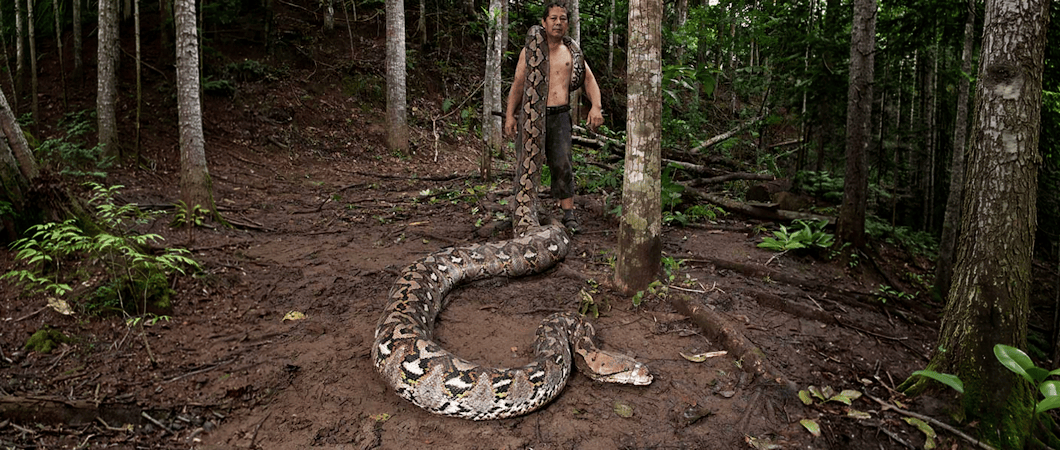
Ibu Baron with local Maros County snake conservationist Budi Purwanto
Near the end of 2025, a remarkable female reticulated python was captured in the Maros region of Sulawesi, Indonesia. Female pythons grow significantly larger than males, and this individual proved to be extraordinary.
The python was carefully measured alive at 23 feet 8 inches long, making her the longest accurately measured wild snake known today. Measuring a living snake of this size is extremely difficult. Multiple people were required to safely control the animal while cloth measuring tape was carefully laid along the contours of her body to ensure accuracy. Representatives from Guinness World Records were also present during the process.
The snake was given the name Ibu Baron, meaning “The Baroness.”
Protecting Giant Snakes
Today, Ibu Baron lives under the care of local conservationist Budi Purwanto, who acquired the snake from villagers after her capture and ensured her survival. Protecting remarkable animals like Ibu Baron may help change public perception of giant snakes and encourage conservation efforts for these elusive predators that still remain hidden deep within the world’s rainforests.
Get Premium Quality Food For Your Reptiles
Whether you care for large constrictors, monitor lizards, birds of prey, or other exotic animals, RodentPro.com offers premium frozen feeders raised to provide high quality nutrition. From mice and rats to rabbits, guinea pigs, chickens, and quail, we provide a wide variety of feeder options to help support healthy feeding programs for reptiles and exotic predators of all sizes.
At RodentPro.com, we are committed to providing premium products, consistent quality, and dependable service for reptile owners, breeders, zoos, and wildlife professionals nationwide.